
Last Updated: November 5, 2026
Quick Summary
To dress for formal events, wear a dark suit and tie in navy, charcoal, or black, or a tuxedo for black tie, and skip jeans, short sleeves, and novelty details. Fit matters most for big and tall men, so check the shoulders, sleeve length, and inseam before the event.
- Black tie requires a tuxedo with satin or grosgrain lapels, a formal dress shirt, a bow tie, and formal shoes.
- Black tie optional means a tuxedo is welcome but a dark suit is acceptable.
- Sleeves should end at the wrist bone so a half-inch of shirt cuff shows.
- After 6 p.m., lean darker and richer with heavier fabrics like wool flannel or velvet.
- A belt that matches your shoes is one of the formal essentials.
Table of Contents
- Decoding the Dress Code: What Formal Attire Actually Means
- Formal Wedding Attire for Men: What to Wear and What to Skip
- Big and Tall Formal Suit Fitting Tips That Make the Difference
- Formal Event Accessories for Men: Ties, Shoes, and Finishing Details
- Adjusting Your Formal Look for Season, Venue, and Time of Day
- Building Your Formal Outfit at Lil' John's Big & Tall
- Frequently Asked Questions
Decoding the Dress Code: What Formal Attire Actually Means
Formal attire is a defined dress code, not a vague suggestion, and the fastest way to get it right is to understand what each tier of the code actually requires before you open your closet. At Lil' John's Big & Tall Men's Fashion, we talk to men every week who are staring down a wedding, gala, or ceremony invitation and aren't sure whether "formal" means a tuxedo or just a good suit. This guide walks through exactly how to dress for formal events, from reading the invitation to the final hem.
The stakes are real. Show up underdressed to a black-tie wedding and you'll feel it all night. Overdress at a semi-formal reception and you'll look like you misread the room. The good news: formal dress codes follow a logic you can learn in ten minutes.
Black Tie vs. Formal vs. Semi-Formal
Three terms cause the most confusion, and they are not interchangeable.
- Black tie is the most structured tier: a tuxedo with satin or grosgrain lapels, a formal dress shirt, a bow tie, and formal shoes.
- Formal typically means a dark suit and tie, or a tuxedo depending on the event's time and venue.
- Semi-formal relaxes the rules: a suit, no tie required, and more flexibility in color.
The Emily Post Institute's guide to dress codes is a useful cross-check when an invitation uses wording you don't recognize. When in doubt, ask the host. Nobody has ever been penalized for a polite question.
Reading Ambiguous Invitation Wording
Invitations that say "festive," "cocktail," or "black tie optional" are where most men guess wrong. Black tie optional means a tuxedo is welcome but a dark suit is acceptable (Black Tie Dress Code: Our Comprehensive Guide). Cocktail means a suit, often with a dressier shirt. Festive invites color and personality within formal structure.
If an invitation gives you nothing to work with, default to a dark suit and tie. It is the safest formal choice across nearly every venue and time of day.
Here is how the three most common formal dress codes compare.
| Dress code | What it calls for | Key detail |
|---|---|---|
| Black tie | Tuxedo with satin or grosgrain lapels, formal dress shirt, bow tie, formal shoes | Most structured tier |
| Formal | Dark suit and tie, or a tuxedo depending on time and venue | Safest default is a dark suit and tie |
| Semi-formal | A suit, no tie required | More flexibility in color |
| Black tie optional | Tuxedo welcome but a dark suit is acceptable | Common ambiguous wording |
| Cocktail | A suit, often with a dressier shirt | Common ambiguous wording |
| Festive | Color and personality within formal structure | Common ambiguous wording |
Formal Wedding Attire for Men: What to Wear and What to Skip
For a formal wedding, wear a dark-colored suit in navy, charcoal, or black with a crisp dress shirt and tie; skip jeans, short sleeves, and anything louder than your date's outfit. Wedding attire rewards restraint.
A white button-down is the foundation. A GQ guide to formal shirt and tie pairings reinforces the same principle we give customers: get the shirt right and the rest follows. For black-tie or formal weddings, a French cuff dress shirt elevates the look without adding noise.
What to skip: novelty ties, visible undershirts, and shoes that haven't been cleaned since the last event. Small details read loudest at formal occasions.
Big and Tall Formal Suit Fitting Tips That Make the Difference
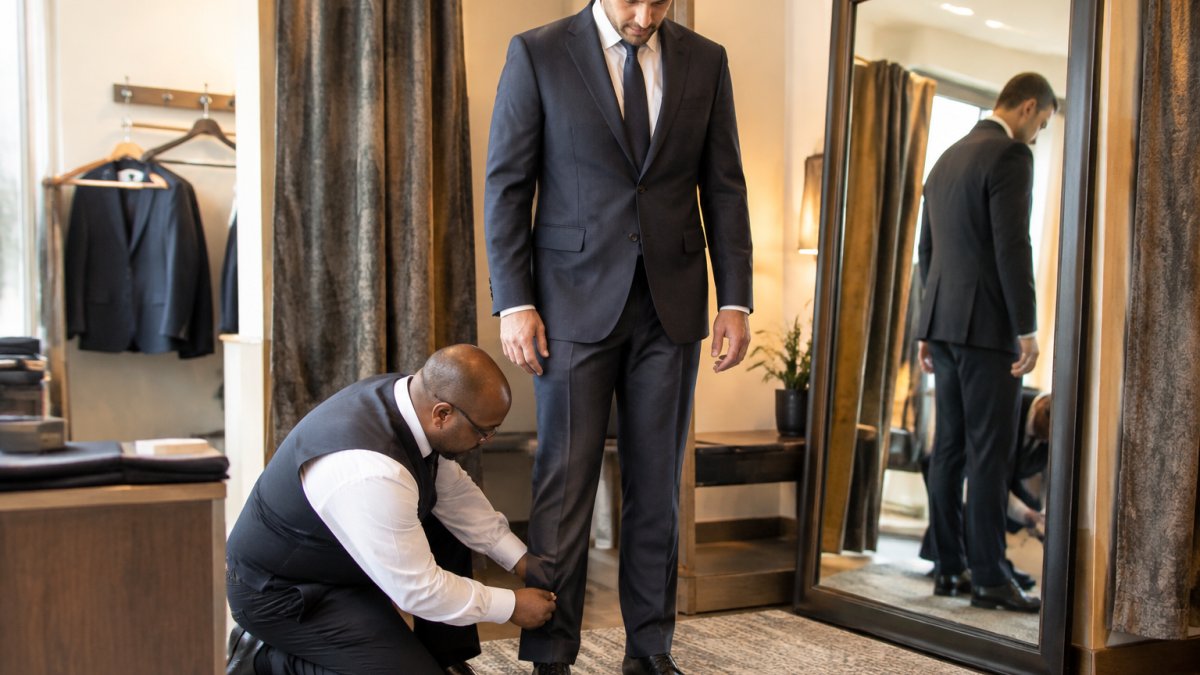
Fit is the difference between a suit that looks tailored and one that looks borrowed, and for big and tall men the three measurements that matter most are shoulders, sleeve length, and inseam. A well-fitted suit flatters a larger frame more than any color choice.
Getting the Shoulders, Sleeves, and Inseam Right
The shoulder seam should sit at the edge of your shoulder, not past it. Sleeves should end at the wrist bone so a half-inch of shirt cuff shows. Inseam is where big and tall shoppers get burned most: a proper rise and a hem done by a tailor beat guessing at off-the-rack lengths every time.
This is exactly why we stock suit separates. A Petrocelli All Wool Solid Black 2 Button Suit Separate Jacket lets you size the jacket to your shoulders and chest, while Petrocelli All Wool Black Suit Separate Pants let you dial in the waist and rise independently. That combination solves the fit problem most big and tall men have lived with for years.

Formal Event Accessories for Men: Ties, Shoes, and Finishing Details
Accessories finish a formal look: a tie or bow tie, polished dress shoes, a simple pocket square, and a belt that matches your shoes are the essentials. Everything else is optional.
Modena-Poplin Dress Shirt–Classic Fit-White →
For black-tie events, a bow tie is the correct choice. A St. Patrick bow tie in paisley or solid adds polish without competing with your suit.

Shoes matter more than most men think. Black dress shoes, polished, are the safe choice for formal wear. Skip sneakers, loafers with chunky soles, and anything with visible wear.
Adjusting Your Formal Look for Season, Venue, and Time of Day
Formal dress codes are not fixed; they flex with season, venue, and hour, and the most common mistake is wearing an evening look to a daytime event or a winter fabric to a summer ceremony. The adjustments below are the ones that matter most in practice.
Time of day. After 6 p.m., lean darker and richer: navy, charcoal, black, and deep burgundy, with heavier fabrics like wool flannel or velvet for jackets. Before noon, lighter shades are acceptable: mid-gray, tan, light navy, and breathable cottons or linen blends. A formal daytime wedding is not the place for a tuxedo; a dark suit in a lighter shade is the safer choice.
Season and weather. For cold-weather events, add a topcoat over your suit rather than a puffer jacket, and choose wool or wool-blend suits that hold their shape. For warm-weather or outdoor ceremonies, choose lighter-weight wool, cotton, or linen blends, and consider an unstructured jacket that breathes.
Venue. A ballroom, cathedral, or historic hotel signals tradition: darker suits, polished Oxfords, and a conservative tie. A garden, beach, or barn venue allows more relaxed formal choices: lighter fabrics, a tie in a softer color, and dress shoes that can handle uneven ground.
Outdoor and daytime specifics. For an outdoor formal event, avoid fabrics that show wrinkles or water spots, and choose shoes with a rubber sole or a heel that will not sink into grass. For a daytime ceremony, a light gray or tan suit with a white shirt and a tie in a muted color is a reliable formula.
For big and tall men, fabric breathability is not a luxury. A Modena Poplin Dress Shirt in a 60% cotton and 40% polyester blend is machine washable and wrinkle resistant, with roomy shoulders and oversized armholes for added comfort.

Watch out: do not assume an evening event is automatically black tie; check the invitation for the named dress code, because many evening weddings are formal but not black tie.
Building Your Formal Outfit at Lil' John's Big & Tall
The right formal outfit starts with the right fit, and that is where we come in. Whether you're attending one wedding or building a full formal wardrobe, we carry big and tall sizes, with suit separates, dress shirts, and accessories curated for big and tall men.
If you're still deciding between a sport coat, blazer, or suit jacket for an upcoming event, our guide on sport coat vs. blazer vs. suit jacket breaks down the differences. And when you're ready to complete the look, browse our dress shoes to finish the outfit properly.
Frequently Asked Questions
What is the difference between black tie and formal attire?
Black tie is a specific formal dress code: a tuxedo with satin or grosgrain lapels, a formal dress shirt, and a bow tie. Formal attire is the broader category that includes black tie but also allows a dark suit and tie when the event is less traditional. If an invitation says black tie, wear a tuxedo. If it says formal, a navy or charcoal suit with a dress shirt and tie is appropriate. When in doubt, ask the host or lean dressier.
How should a suit fit for a formal event?
The jacket shoulder seam should sit at the edge of your natural shoulder, with no pulling across the back when you button it. Sleeves should show about half an inch of shirt cuff. Trousers should sit at your natural waist and break lightly on the shoe, or have no break if you prefer a cleaner line. For big and tall frames, roomier armholes and a comfort-stretch back panel let the jacket move with you instead of binding.
What accessories are essential for a formal outfit?
Start with a tie or bow tie that coordinates with your suit rather than matching it exactly, plus a white or light dress shirt. Add dark leather dress shoes, a belt that matches the shoes, and a pocket square for black tie or gala events. Cufflinks are needed only with French-cuff shirts. Keep jewelry minimal: a watch and, if you wear one, a simple ring. The goal is a polished, coordinated look, not a display of accessories.
Can big and tall men wear patterns to formal events?
Yes, with restraint. Subtle patterns such as a fine pinstripe, a small check, or a textured weave add interest without drawing attention to fit issues. Avoid large plaids or bold prints on a big frame, since they can overwhelm the silhouette. Solid navy, charcoal, and grey remain the safest choices for formal events, and a patterned tie is an easy way to add personality while keeping the suit understated.
Formal events don't have to be a source of stress. Get the fit right, follow the dress code, and the rest falls into place. Lil' John's Big & Tall Men's Fashion offers suit separates in extended sizes, expert alteration guidance, and a curated selection of dress shirts and accessories built for big and tall men. Get started with Lil' John's Big & Tall Men's Fashion and walk into your next formal event looking the part.

0 comments