
Lil' John's Blog

The Men’s Accessories That Actually Matter

The Men’s Accessories That Actually Matter

The Men’s Accessories That Actually Matter

Accessories may seem like small details, but they can completely change the way an outfit looks. The right watch, belt, or pocket square can make even a simple outfit feel more polished and intentional.

The key is knowing which accessories are worth wearing and when to stop adding more.

A Quality Watch

A dependable watch is one of the most versatile accessories a man can own. It adds a finished touch without demanding too much attention.

For everyday outfits, choose a simple watch with a leather or metal band. A classic design can work with everything from jeans and a polo to a suit and dress shirt.

You do not need an oversized or flashy watch to make an impression. A clean, timeless style is usually the most versatile choice.

A Belt That Coordinates With Your Shoes

Your belt and shoes do not always have to match perfectly, but they should coordinate.

Brown shoes look best with a brown belt, while black shoes should generally be paired with a black belt. Try to keep the leather tones similar so the outfit feels connected.

For casual outfits, woven and textured belts can work well with chinos, jeans, loafers, or clean sneakers.

Minimal Jewelry

Jewelry can add personality to an outfit, but a little goes a long way. A simple chain, ring, bracelet, or pair of cuff links is often enough.

If you are already wearing a noticeable watch, keep the rest of your jewelry minimal. The goal is to complement your outfit without making it feel crowded.

Sunglasses

A quality pair of sunglasses is both practical and stylish. Choose a frame that fits your face comfortably and works with your personal style.

Classic frame colors such as black, brown, tortoiseshell, or silver are easy to wear with different outfits. Make sure the frames sit properly and are not too wide or narrow for your face.

Pocket Squares

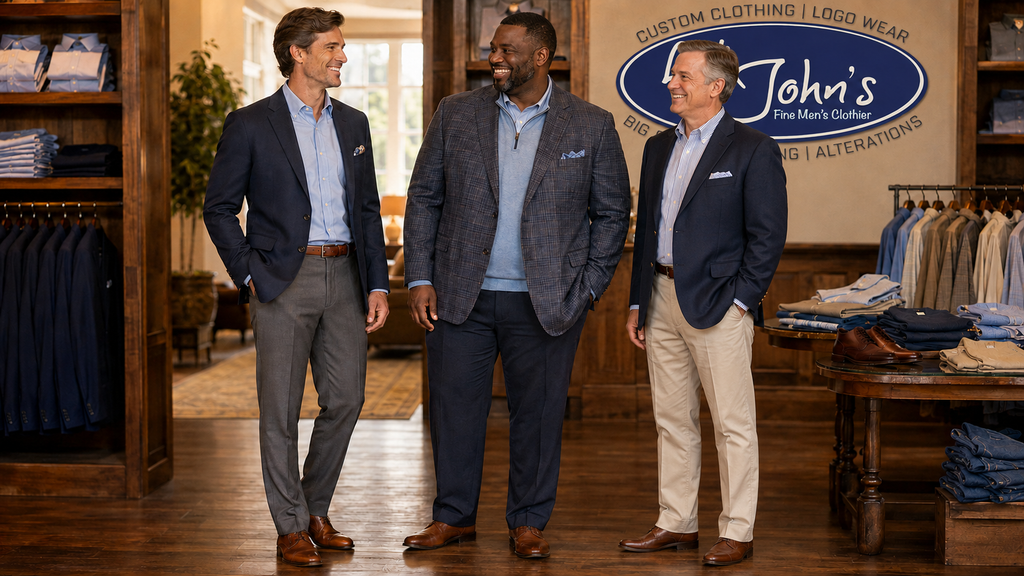
For dressier outfits, a pocket square is an easy way to add color and personality to a sport coat or suit.

Your pocket square should complement your shirt or tie without matching it exactly. If you are new to wearing one, begin with a simple white pocket square. It works with nearly every jacket and creates a clean, timeless appearance.

How Many Accessories Should You Wear?

Start with one or two accessories and build from there. A watch and a coordinating belt may be all you need for a casual outfit. For a dressier look, add a pocket square or a simple piece of jewelry.

Too many accessories can compete for attention and make an otherwise polished outfit feel cluttered. Choose pieces that have a purpose and allow them to complete the outfit instead of taking it over.

At Lil’ John’s, we can help you find the right accessories to complement your outfit, fit your personal style, and make every look feel complete.
Do Men’s Fashion Trends Really Matter?

Do Men’s Fashion Trends Really Matter?

Do Men’s Fashion Trends Really Matter?

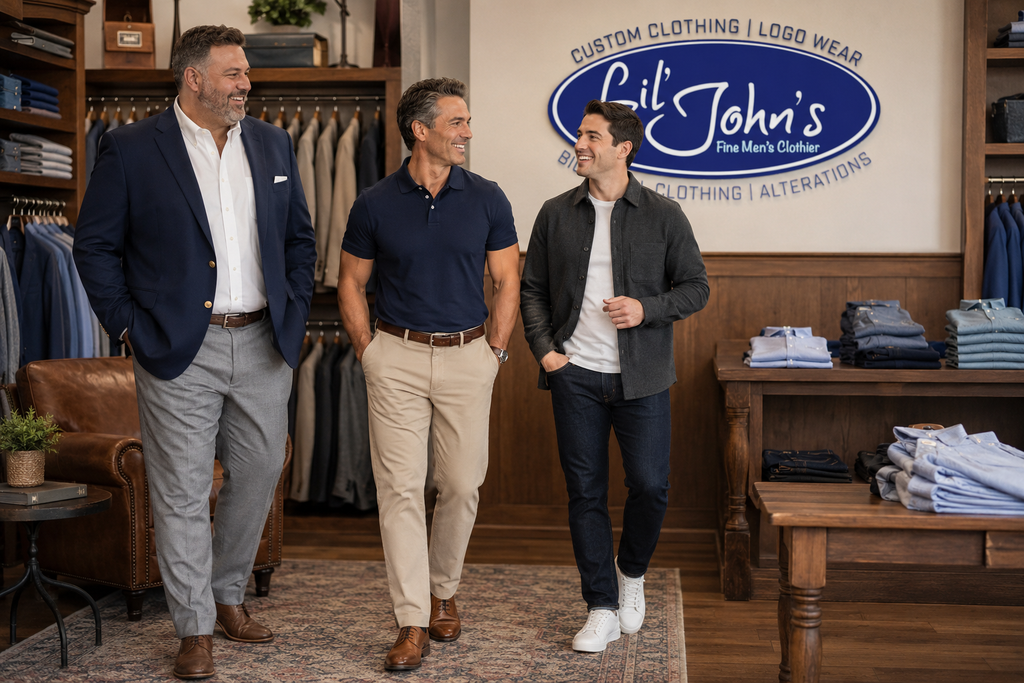
Fashion trends come and go, but good style lasts much longer. While trends can be a fun way to update your appearance, you do not have to follow every new look to dress well.

The best wardrobe begins with classic, well-fitting pieces that you can wear confidently year after year.

Trends Are Optional

Trends can introduce new colors, patterns, and silhouettes, but they should never make you feel uncomfortable or unlike yourself.

If a current trend fits your personality and lifestyle, there is nothing wrong with trying it. However, you should not feel pressured to replace your wardrobe every season just to keep up.

Personal style is more important than wearing whatever happens to be popular.

Start With Timeless Staples

Before spending money on trendy pieces, make sure your wardrobe includes the basics. These items are versatile, dependable, and easy to combine.

Every man should consider owning:

  • A navy or charcoal suit
  • A versatile sport coat
  • White and light-blue button-down shirts
  • Solid polos and quality T-shirts
  • Dark, non-distressed jeans
  • Khaki, navy, or grey chinos
  • A classic lightweight jacket or overshirt
  • Clean leather shoes or simple sneakers

These pieces can be dressed up or down and will remain useful long after a particular trend has faded.

Fit Matters More Than Fashion

Even the most fashionable outfit will not look right if it does not fit properly. A classic outfit with the correct fit will almost always look better than a trendy outfit that is too tight, too loose, or poorly proportioned.

Pay attention to how shirts fit across your shoulders, where your pants fall, and how jackets sit across your chest. Proper alterations can also make an enormous difference.

Add Trends Subtly

If you enjoy experimenting with trends, introduce them one piece at a time.

Try adding a current color through a polo, patterned shirt, pocket square, or lightweight jacket. You could also update a classic outfit with a modern sneaker or a more contemporary fabric.

Keeping the rest of your outfit simple allows the trend-inspired piece to add personality without taking over your entire look.

Invest in Clothes You Will Actually Wear

Before buying something, ask yourself whether it works with pieces you already own and whether you can imagine wearing it a year from now.

A quality item that you wear regularly is usually a better investment than a trendy piece that only works for one season.

Your wardrobe should make getting dressed easier, not leave you with a closet full of clothes that are difficult to match.

Build Your Own Style

Trends may offer inspiration, but they should not define the way you dress. Begin with classic staples, prioritize proper fit, and choose pieces that make you feel comfortable and confident.

At Lil’ John’s, we help men of every size build wardrobes that look great today and continue working for years to come. Whether you prefer timeless classics or want to introduce a few modern updates, our team can help you find the right fit and style.

How to Dress for Your Body Type: A Men’s Fit Guide

How to Dress for Your Body Type: A Men’s Fit Guide

How to Dress for Your Body Type: A Men’s Fit Guide

The best outfit is not determined by your height, weight, or build. It comes down to understanding your proportions and choosing clothing that fits them correctly.

Style rules can provide a helpful starting point, but they are not meant to limit what you wear. The goal is to create balance, improve comfort, and help you feel confident in your clothing.

Dressing a Slim Build

Men with slimmer builds often benefit from tailored clothing that follows the body without fitting too tightly.

Choose shirts, jackets, and pants that create a clean shape while still allowing comfortable movement. Jackets with light structure through the shoulders can add definition, while layering a shirt with an overshirt, sweater, or sport coat can create more dimension.

Avoid clothing that is extremely oversized because it can overwhelm your frame. Clothes that are too tight may also make your build appear narrower than it is.

Dressing a Broad or Big-and-Tall Build

Broader and big-and-tall men can use structure and thoughtful layering to create a balanced appearance.

A properly fitted jacket can define the shoulders and create a clean line through the body. Choose fabrics that drape naturally without clinging or adding unnecessary bulk.

Shirts should lie smoothly across the chest and stomach without pulling at the buttons. Pants should sit comfortably at the waist and fall cleanly through the legs.

Dark or tonal colors can create a streamlined appearance, but broad men do not have to avoid color or patterns. The correct size and proportions are much more important.

Dressing a Shorter Build

Shorter men often look their best in clothing that keeps the body’s proportions clean and uninterrupted.

Choose jackets that are correctly proportioned to your height. A jacket that is too long can visually shorten the legs, while one that is excessively short may look out of balance.

Pants with little or no extra fabric gathering around the shoes help create a longer, cleaner line. Vertical stripes, tonal color combinations, and properly placed waistlines can also create a more balanced appearance.

Avoid oversized shirts, long jackets, and pants with excessive bunching because they can overwhelm a shorter frame.

Pay Attention to Proportions

Two men may wear the same size but need completely different cuts. Shoulder width, torso length, leg length, and waist placement all affect how clothing fits.

That is why trying on different cuts and working with someone who understands proper fit can be more valuable than relying only on the size printed on the label.

Alterations can also make a major difference. Adjusting a sleeve, pant length, or jacket waist can transform an outfit from simply wearable to exceptionally flattering.

Fit Is More Important Than Rules

Body-type advice should guide you, not restrict you. You should still wear the colors, patterns, and styles that make you feel like yourself.

The most important thing is choosing clothing that works with your proportions instead of fighting against them. When the fit is right, your entire outfit looks more polished and you feel more confident wearing it.

At Lil’ John’s, we carry men’s clothing in sizes Small through 12XL and understand that every man is built differently. Our team can help you find the right size, cut, and proportions so your clothing feels comfortable and looks like it was made for you.

What Shoes Should Men Wear With What? A Simple Guide

What Shoes Should Men Wear With What? A Simple Guide

What Shoes Should Men Wear With What? A Simple Guide

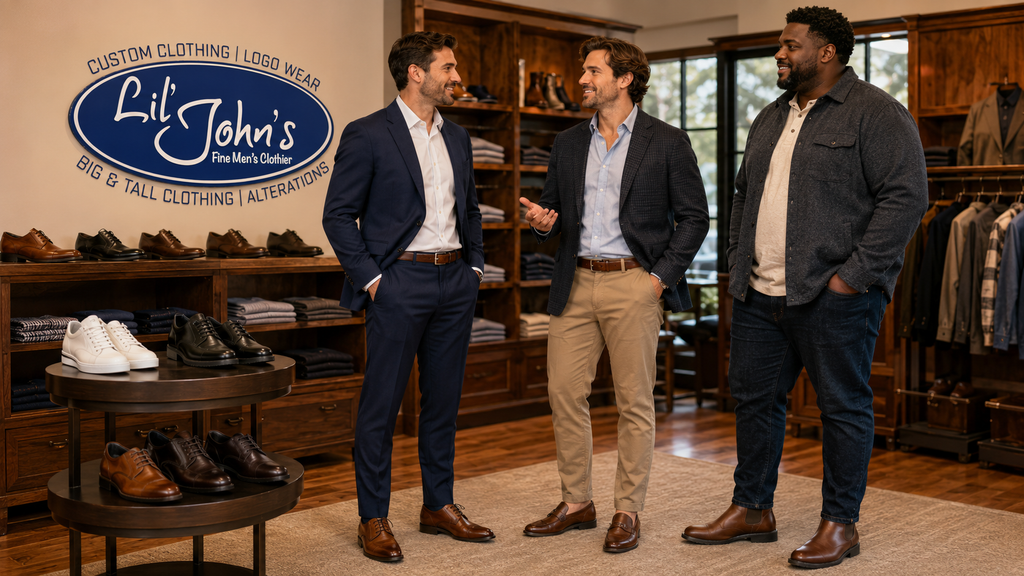
Shoes are more than the final part of an outfit. They can define whether your entire look feels formal, casual, modern, or relaxed.

The right shoes make your clothing look intentional, while the wrong pair can make an otherwise polished outfit feel disconnected. Fortunately, a few simple rules make choosing the right shoes much easier.

What Shoes Should You Wear With a Suit?

Oxfords and derbies are dependable choices for suits and formal outfits.

Oxfords have a clean, streamlined design that works especially well for weddings, business meetings, and formal occasions. Derbies offer a slightly more relaxed appearance while still looking polished enough for most suits.

Black dress shoes are the most formal option and pair well with black, charcoal, and darker suits. Brown shoes work beautifully with navy, grey, tan, and many patterned suits.

Should Your Belt Match Your Shoes?

In formal and professional settings, your belt and shoes should coordinate closely.

Wear a black belt with black shoes and a brown belt with brown shoes. The shades do not have to match perfectly, but they should belong to the same general color family.

For casual outfits, you have more flexibility. A woven, suede, or textured belt can coordinate with loafers, boots, or minimal sneakers without matching them exactly.

What Shoes Work for Smart-Casual Outfits?

Loafers are one of the most versatile choices for smart-casual dressing. They work well with chinos, tailored trousers, dark jeans, polos, button-down shirts, and casual sport coats.

Minimal leather sneakers can also work when the setting is more relaxed. Choose a clean, simple pair in white, brown, navy, or another neutral color.

Avoid heavily worn athletic shoes when the rest of your outfit is polished. Clean footwear keeps the look intentional.

When Should You Wear Boots?

Boots are especially useful for fall and winter outfits. Chelsea boots, chukka boots, and clean leather lace-up boots pair naturally with dark jeans, chinos, sweaters, overshirts, and casual jackets.

Choose a sleeker boot for dressier outfits and a more substantial boot for relaxed seasonal looks.

Your pants should fall neatly over or just above the boots without excessive bunching around the ankles.

What Shoes Work With Jeans?

Dark, non-distressed jeans can be worn with loafers, minimal sneakers, Chelsea boots, chukka boots, or casual leather shoes.

The best choice depends on the shirt and jacket you are wearing. A sport coat and button-down shirt look sharper with loafers or sleek boots. A polo, sweater, or overshirt can work well with clean sneakers or casual boots.

Start With Versatile Colors

If you are building your shoe collection, begin with colors that work with most of your wardrobe.

Consider starting with:

  • Dark-brown dress shoes
  • Black dress shoes
  • Brown loafers
  • Clean white or neutral leather sneakers
  • Brown or dark-tan boots

These options will cover most formal, professional, smart-casual, and everyday outfits.

Keep Your Shoes in Good Condition

Even the correct style will not look polished if the shoes are dirty or heavily worn. Clean and condition leather regularly, replace worn laces, and use shoe trees when possible to help maintain their shape.

The simple rule is to match the formality of your shoes to the rest of your outfit. Dress shoes belong with polished clothing, loafers and minimal sneakers work for smart casual, and boots complete relaxed seasonal looks.

At Lil’ John’s, our team can help you coordinate your shoes, belt, and clothing so every part of your outfit works together.

How to Care for Men’s Clothing So It Lasts

How to Care for Men’s Clothing So It Lasts

How to Care for Men’s Clothing So It Lasts

Quality clothing is an investment. The way you wash, dry, hang, and store your clothes can determine whether they look good for a few months or remain part of your wardrobe for years.

Proper garment care does not have to be complicated. A few simple habits can protect the fit, color, and fabric of your favorite pieces while saving you money over time.

Always Read the Care Label

Before washing or drying any garment, check the care label. Different fabrics require different temperatures and cleaning methods.

Cotton, wool, linen, performance fabrics, and delicate blends should not always be treated the same way. Following the manufacturer’s instructions helps prevent shrinking, fading, stretching, and fabric damage.

When in doubt, use a gentle cleaning method or consult a professional cleaner.

Avoid Washing Clothes More Than Necessary

Not every item needs to be washed after one wear. Jackets, jeans, sweaters, and outerwear can often be worn several times if they are not stained or exposed to heavy perspiration.

Allow garments to air out between wears and use a clothing brush to remove dust and surface debris. Washing less frequently reduces stress on the fabric and helps colors last longer.

Items worn directly against the skin, such as T-shirts and dress shirts, will naturally require more frequent cleaning.

Air-Dry Delicate Items

High dryer temperatures can shrink clothing, weaken fibers, and cause colors to fade. Delicate shirts, polos, sweaters, and performance fabrics often last longer when they are air-dried.

Reshape the garment while it is damp and follow the care label to determine whether it should be hung or laid flat.

Sweaters and heavier knitwear should usually be dried flat because hanging them while wet can stretch the shoulders and body.

Use the Right Hangers

Jackets and sport coats should be stored on broad, supportive hangers that help preserve their shoulder shape. Thin wire hangers can create dents and cause structured garments to hang incorrectly.

Dress shirts and polos can be placed on smooth wooden or sturdy plastic hangers. Fold sweaters and knitwear instead of hanging them for extended periods, as gravity can stretch the fabric.

Give clothing enough space in your closet to breathe rather than pressing everything tightly together.

Do Not Over-Dry-Clean

Dry cleaning is sometimes necessary, especially for suits, sport coats, wool garments, and items labeled “dry clean only.” However, cleaning these pieces too frequently can place unnecessary stress on the fabric.

Unless a garment is stained or has developed an odor, brushing it, airing it out, and allowing it to rest between wears may be enough.

Always treat stains quickly and tell your cleaner what caused the stain so it can be handled correctly.

Steam Carefully

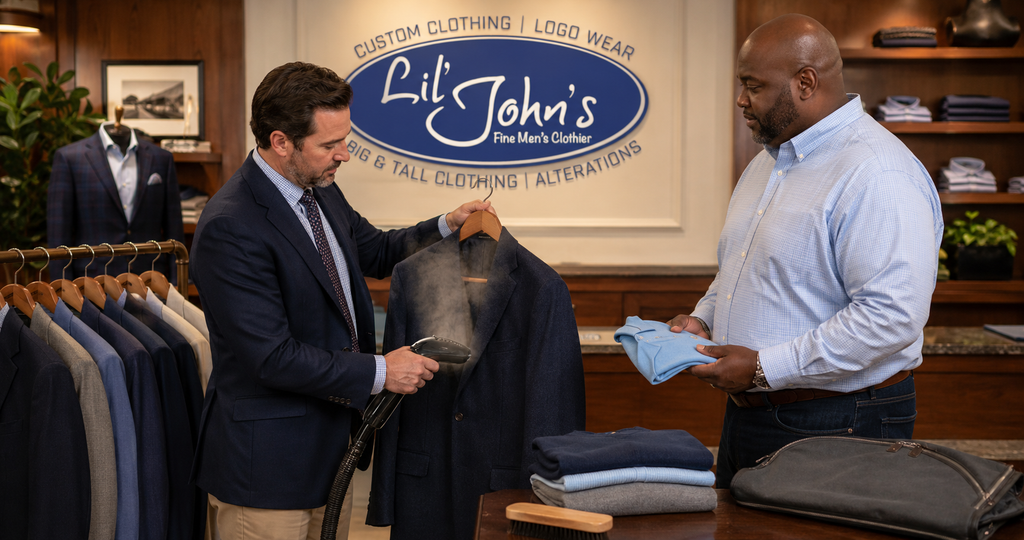
A garment steamer can help release wrinkles and refresh clothing without the direct pressure of an iron. Keep the steamer moving and follow the fabric’s care instructions.

When ironing is appropriate, use the correct temperature. Excessive heat can create shine, damage delicate fibers, or leave permanent marks.

Store Seasonal Clothing Properly

Before storing seasonal clothes, make sure every item is clean and completely dry. Place suits and jackets in breathable garment bags rather than sealed plastic covers.

Store clothing in a cool, dry space away from direct sunlight. Avoid overpacking containers because compressed garments can lose their shape and develop deep wrinkles.

Small Habits Protect Your Investment

Good clothing care comes down to consistency. Read the labels, wash only when necessary, avoid excessive heat, use proper hangers, and store each garment according to its fabric and construction.

Well-maintained clothing keeps its shape, color, and polished appearance longer. At Lil’ John’s, our team can help you choose quality men’s clothing and provide guidance on caring for each piece so your wardrobe continues looking its best.

Big & Tall Suit Fitting Guide | Plus Size Men’s Suits | Lil’ John’s

Big & Tall Suit Fitting Guide | Plus Size Men’s Suits | Lil’ John’s

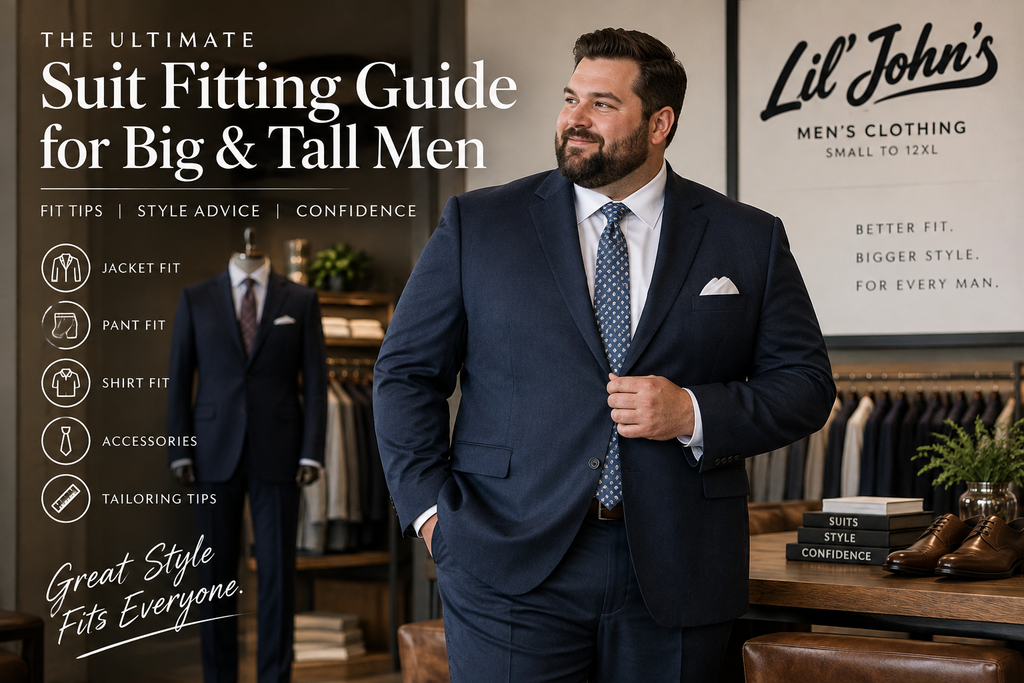
Learn how Big & Tall and plus size men’s suits should fit with Lil’ John’s suit fitting guide. Get tips for jackets, pants, sleeves, tailoring and finding the perfect fit.

How to Dress Big & Tall Men | Big & Tall Men’s Fashion Tips

How to Dress Big & Tall Men | Big & Tall Men’s Fashion Tips

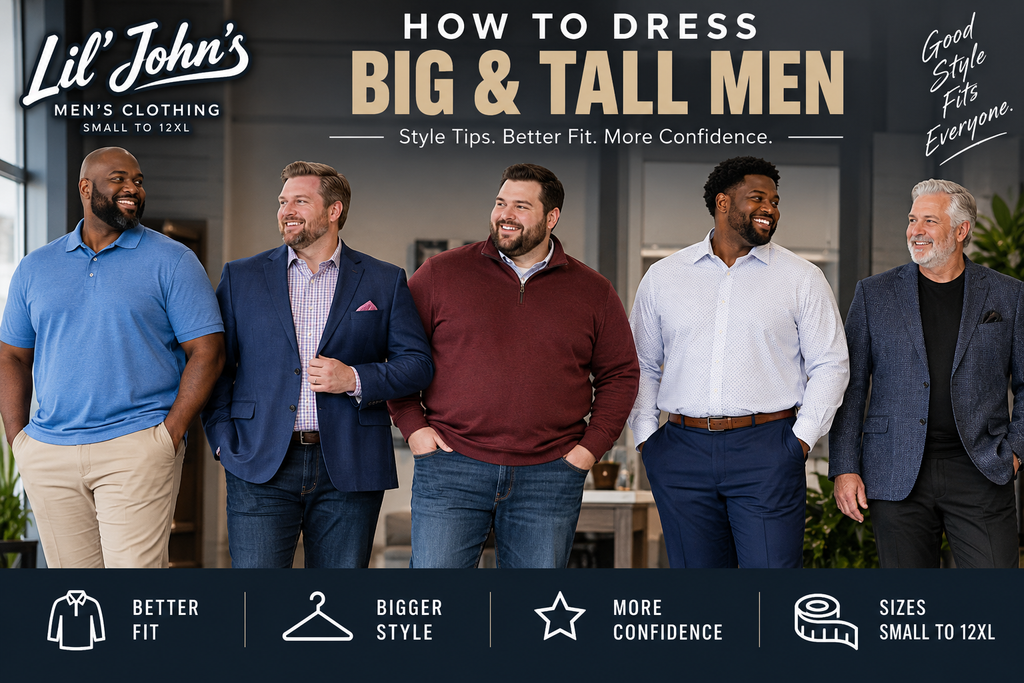
Learn how to dress big and tall men with practical tips for better fit, proportion and style. Discover Big & Tall men’s fashion tips from Lil’ John’s, with sizes Small through 12XL.

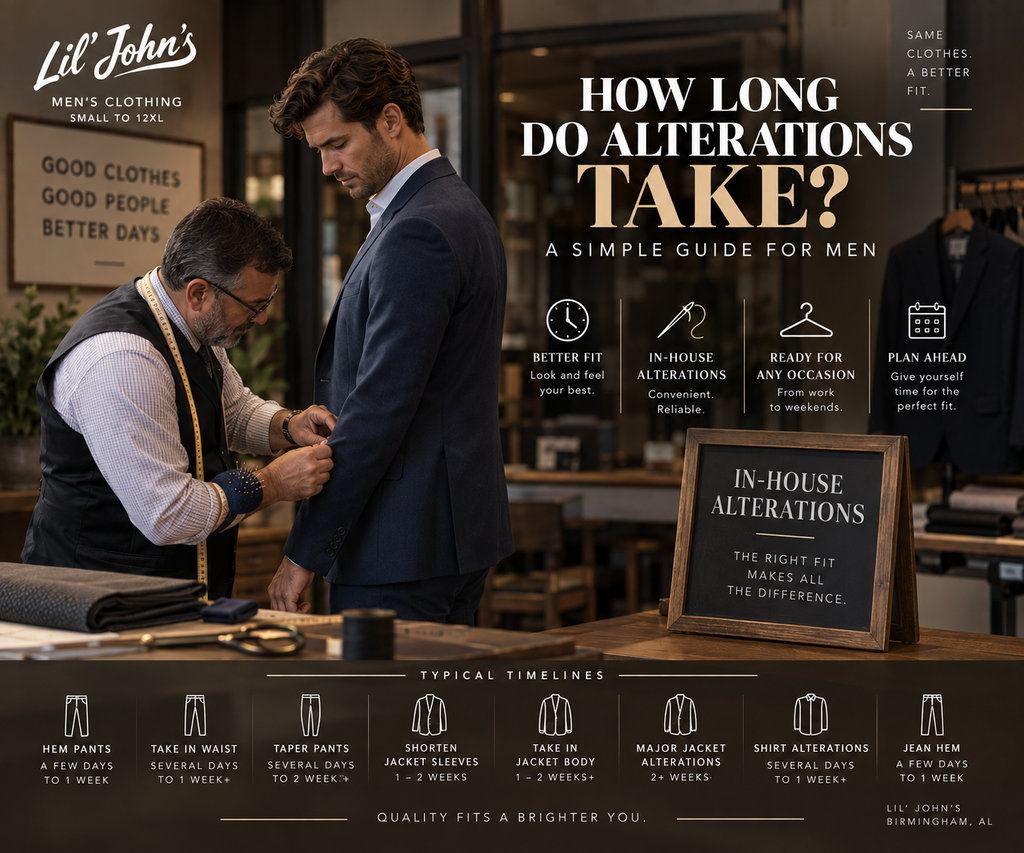
How Much Do Men’s Alterations Cost? Tailoring Price Guide | Lil’ John’s

How Much Do Men’s Alterations Cost? Tailoring Price Guide | Lil’ John’s

How much do men’s alterations typically cost? See estimated prices for hemming pants, shortening suit sleeves, tapering trousers, taking in jackets, altering shirts and more.

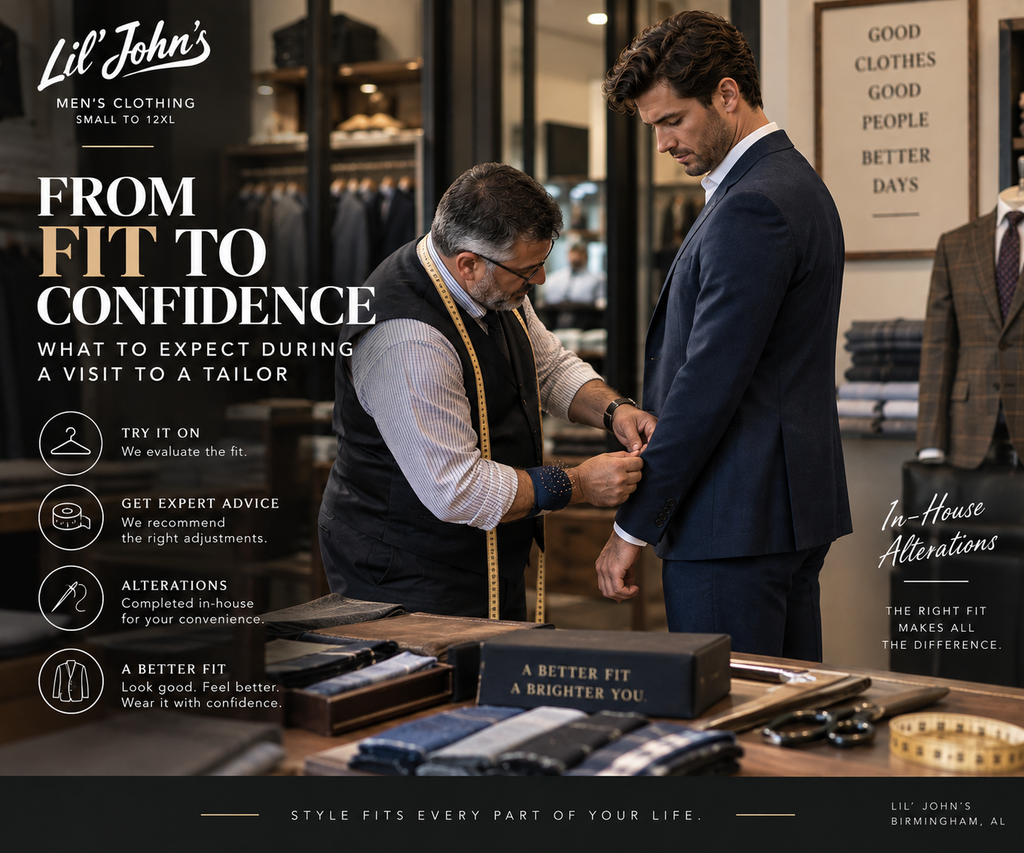
What to Expect at a Tailor | Men’s Alterations Guide | Lil’ John’s

What to Expect at a Tailor | Men’s Alterations Guide | Lil’ John’s

Never visited a tailor before? Learn what to expect during a men’s fitting, what to bring, how alterations work, and how Lil’ John’s in-house alterations can help you get the right fit.

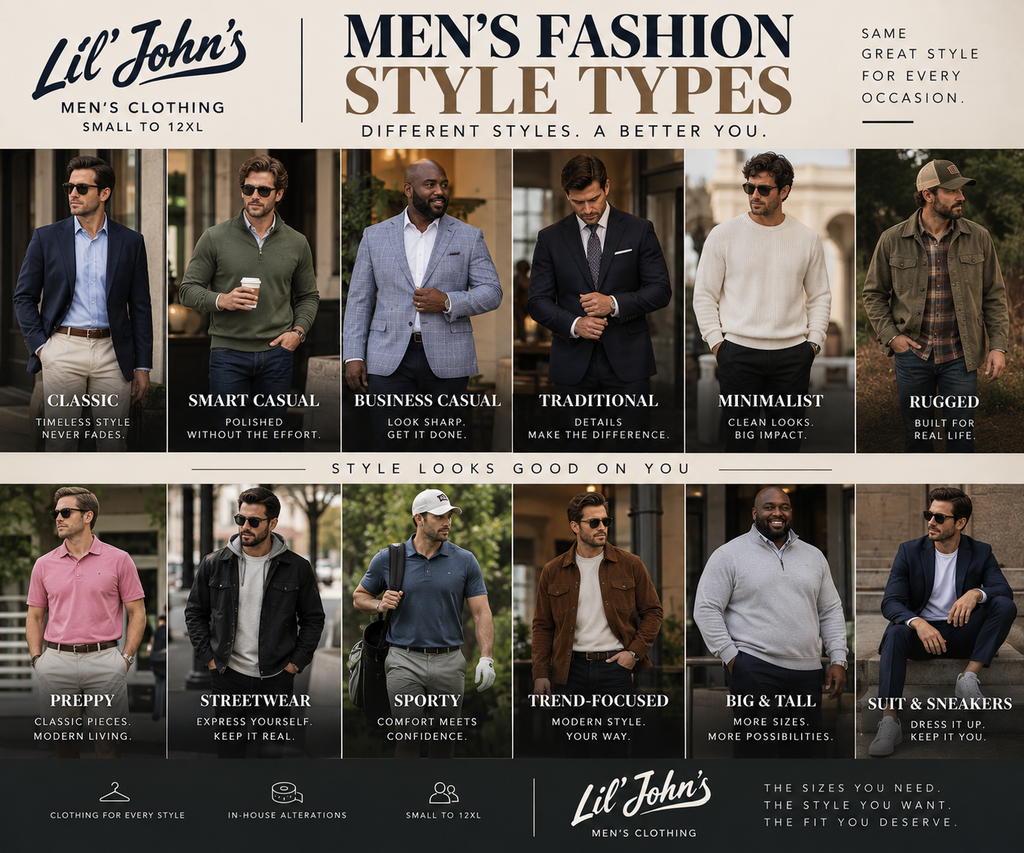
Men’s Fashion Style Types: Find Your Personal Style | Lil’ John’s

Men’s Fashion Style Types: Find Your Personal Style | Lil’ John’s

Discover the most popular men’s fashion style types, from classic and smart casual to preppy, rugged, minimalist and modern. Find the men’s clothing style that fits you at Lil’ John’s. 

1 2 3 … 7 Next »

Our brands